gottahunt.com/trip-reports/gLlLmHwnB1UJ/hunting-come-hell-or-high-water
Hunting, Come Hell or High Water
Or "Mad Dogs and Englishmen"
 1 / 3
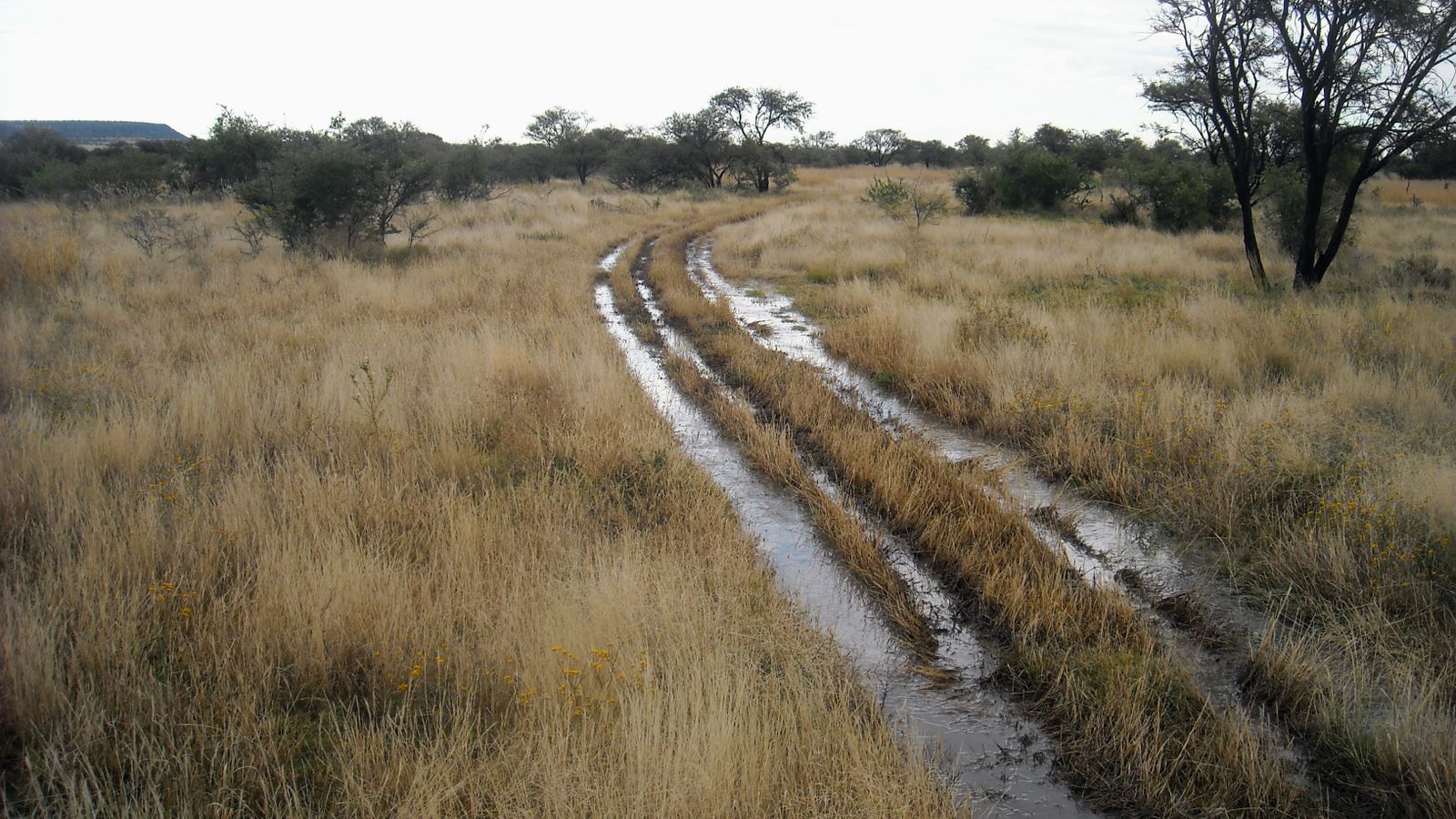
I heard the black wildebeest before I saw them — hooves breaking the sheet of water that covered the plain of short grass, the herd moving in from my right. I stood in ankle-deep mud among the branches of a large, sprawling sweet thorn tree in the middle of a flat, almost lawn-like expanse of grass. The tree concealed me but boxed in my view, leaving me only the ground directly ahead. The herd, eighty strong, had already passed once; I'd picked out some good bulls but none had offered a shot.
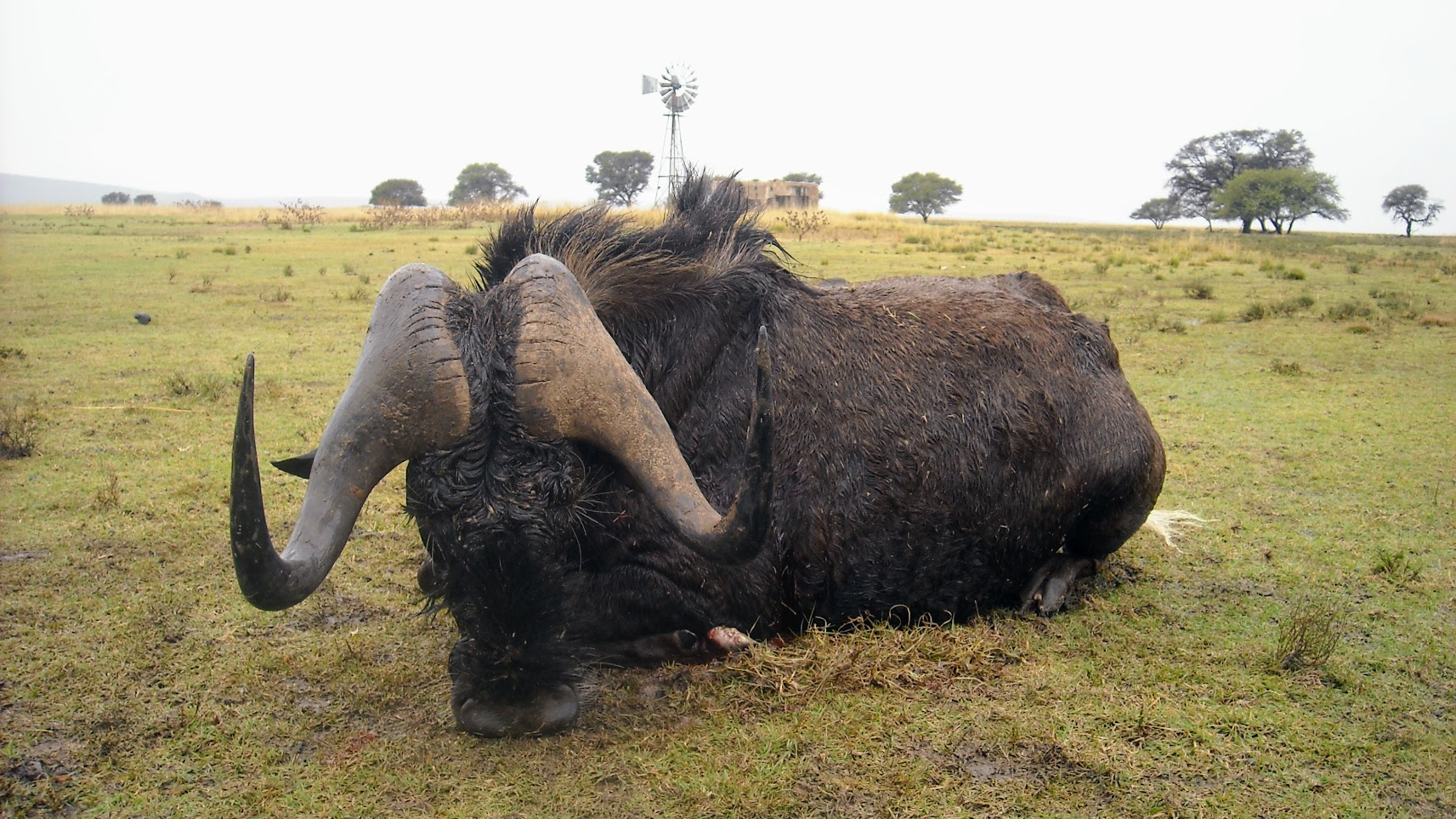
Cows came first, some with bleating calves at their heels, then a string of immature animals. A good bull followed, but he passed too briskly for a shot. Then three bulls came together along the boundary where the short grass met the taller red grass beyond, walking in so tight a group that no daylight showed between them. All three were good; one stood out, with thick, hard, cracked bosses and horns that swept down to the level of his eyes, perhaps a touch lower. The trio paused. One walked on, and the other two followed side by side. The bigger bull was nearer, but untouchable — a bullet through him might carry on and wound his companion. As the rain began again, I shifted my sights to the bull on the outside. Most of the herd had passed, and a third chance seemed unlikely, so I settled on him as both bulls stood. I was catching my breath when the bigger bull stepped forward, clear of the other. I moved the crosshairs to his shoulder and squeezed. He bucked at the impact, took a few steps as he landed, then dropped into a puddle, kicked once or twice, and lay still. I had my black wildebeest bull — the quarry that had drawn me to the central Free State in one of the wettest seasons on record.
For many keen hunters, the traditional four-month season of May through August is simply not long enough. We stretch it by hunting farms that hold certificates of adequate enclosure, which exempts them from seasonal restrictions and lets them offer hunting year-round. It's a good way to spread out the year's hunting — and its costs — but it also exposes us to risks the winter months keep at bay: poor weather in general, and rain in particular.
I had booked an early-April hunt with Carel Coetzer of Grasslands Safaris, near Brandfort in the Free State. The evening before I was due to leave, Carel phoned: torrential rain had hammered the area over the previous 24 hours — 60 mm on his farm that night alone — and turned it into a quagmire. He suggested we postpone to the next available date, mid-May. Beyond the difficulty of hunting waterlogged ground, recovering animals from it would be nearly impossible. The disappointment must have been thick in my voice as I agreed, though I knew he had my interests at heart and that the call was the right one.
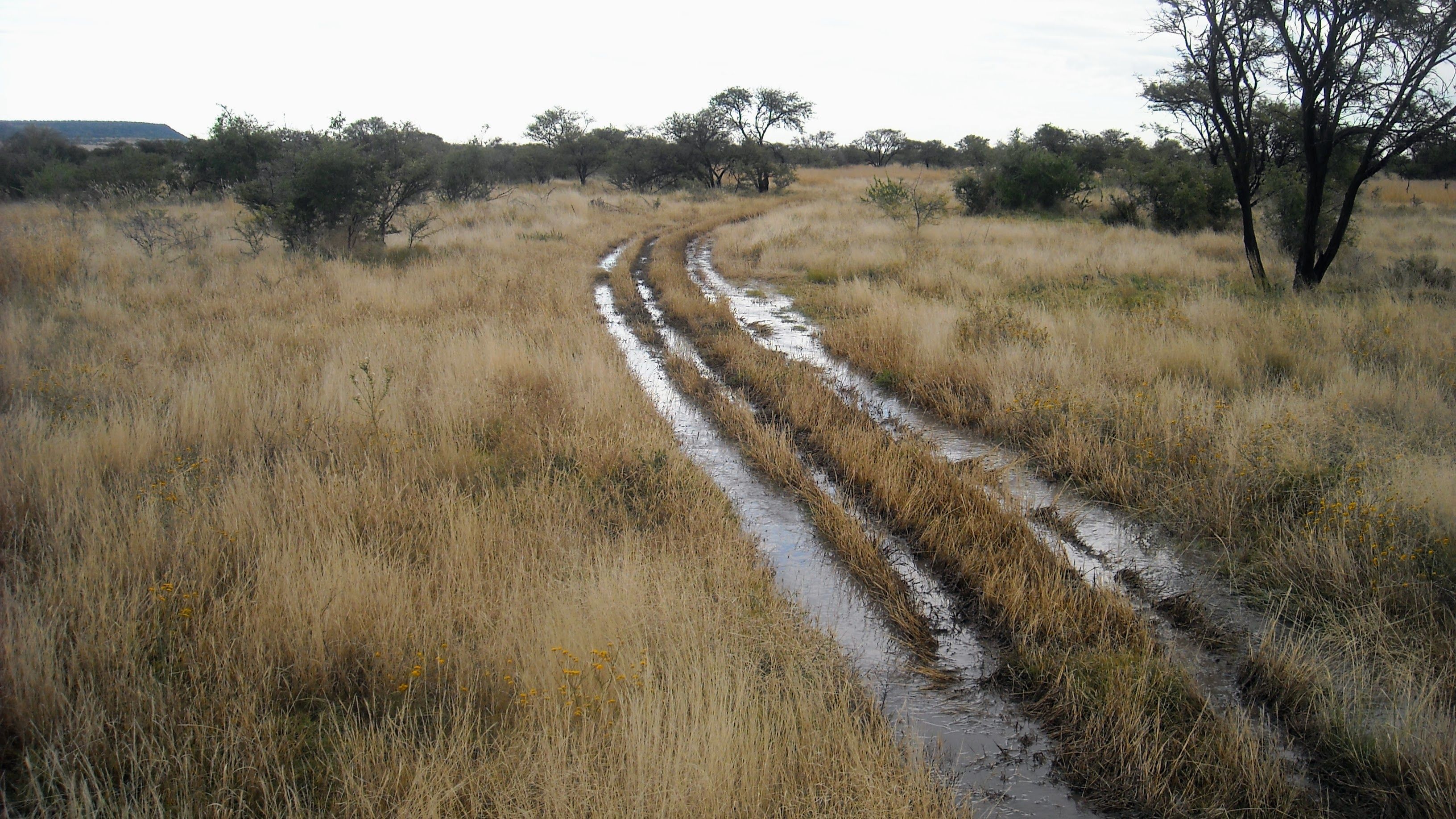
Six weeks later, my hunting mate Div and I left Pretoria at 04:00 on a Thursday in mid-May, bound for Brandfort. We reached Grasslands a few hours later, where Carel's wife, Carine, welcomed us warmly — and with more bad news. The rains had returned and the veld was waterlogged again. She drove us out to show us the farm and the spruit, which was in flood and running two feet deep at the gate into the hunting area. If we wanted to go ahead, she said, the only way into camp was by quad bike, and she kindly offered us two of their Suzukis. Where there's a will there's a way; we took her up on it and returned to the lodge, where our guides, Sabata and Tekan, were waiting with two pairs of gum boots.
The rain kept falling as we checked our rifles at the range. We were both shooting .30-06 Springfields with Federal 180-grain ammunition; the last two shots sat on the vertical line of the crosshair, two inches high at 100 metres, and left us confident in our equipment. This was also the first hunt for my new synthetic-stocked Zastava Mauser — bought after an earlier soaking on a previous hunt, and well suited to the conditions.
After a quick lesson on the quads, we set off for the hunting area — Div behind Tekan, me behind Sabata, each guide holding our cased rifles against the rain and mud. Only once we were in the veld did the extent of the flooding become clear. The farm looked more like the Kafue Flats than typical Free State grassveld, water lying over the whole of it. The roads were impassable even to a four-wheel-drive, and I was soon impressed by the quads, which seemed to float over the thick mud. Carine had suggested we start on blesbuck, which we could load onto the bikes; she was less sure how we'd recover a heavier black wildebeest. We located the blesbuck herds from the quads, then closed to within 200 to 250 metres on foot. We carried the rifles in a gun bag and a hard case while riding, but neither was waterproof, so each rifle had to be wiped down whenever it came out. Luckily I'd packed a cloth in my kit box for exactly that. Over the morning, Div and I each took a fine ram, both qualifying for Rowland Ward, and that afternoon Div added another monster at 18¼ inches.
It rained through the night, and the morning stayed grey and drizzling. The spruit had risen higher still, and the veld was wetter than the day before. Not knowing whether things would improve or worsen, we decided to try for our black wildebeest that day and to work out the recovery once one was down. Stalking soon proved out of the question: the open ground the wildebeest favoured would have meant crawling, and while we were happy enough to get wet and muddy, a rifle caked in mud after a crawl would be useless. Instead, Div and I would take up strategic positions and hunt the voorsit way, while the guides used the quads to nudge the animals toward us. Leaving Sabata and Tekan with the bikes, we walked about a kilometre to the sweet thorn tree, then waited over an hour in the wet, the tree breaking some of the biting wind. The herd passed once, but no bull stood within range. Div then moved off to a second position, reckoning we'd do better split up. He hadn't been gone long when the herd came through again, and I took the 25⅜-inch bull. Div got his own the next day, once the weather had eased and the animals had moved to higher, more wooded ground where he could put in an excellent stalk.
If you hunt in the months that can turn wet, a little preparation makes bad weather far easier to handle. First, a waterproof rifle case or bag is invaluable. We made do with a canvas case and a plastic hard case, neither of them waterproof; wrapping them in black refuse bags helped, but we still had to wipe the rifles down every time they came out. Always pack a basic cleaning kit. The yellow kitchen cloth I'd thrown in my bag proved invaluable for wiping mud and water off the rifles in the field. Keep gun oil and a clean cloth on hand too, to lay down a fresh protective layer at the end of each day once the "dirty" cloth has taken off the moisture and mud. Ideally, run a patch through the bore each evening as well, in case any water has found its way in.
A waterproof jacket or groundsheet is worth having too — both to keep you dry on a vehicle whose spinning wheels fling mud, and because you can shed it before walking or stalking and keep the shirt underneath clean. I learned that carrying a slung rifle against a muddy shirt leaves the scope forever collecting mud and needing a wipe. I use a neoprene Scopecoat to protect my scopes in storage and transit and left it on as much as I could, though there are obviously times it has to come off. Leather recovery gloves earn their place as well — warm, yes, but mainly dry and clean; slip them off before you open the rifle case and you keep the mud off your hands and the rifle. Finally, dry feet are happy feet. Carel guides plenty of waterfowlers and had two spare pairs of gum boots to lend us. They're poor for long walks and clog with mud in the treads, but far more comfortable than wet hunting boots. I won't hunt the out-of-season months again without a pair packed.
On our second evening, Carel invited us for a drink in the lodge bar to talk over the hunt. The farm, he told us, had taken more than its average annual rainfall in May alone — one of the wettest months on record. As we went over the conditions the rain had made, he shook his head, looked at Div and said, "Only mad dogs" — then at me — "and Englishmen." He may have been right.
Responses
Sign in to respond.
Loading responses…