gottahunt.com/rifles/qgMc3HUMGYqi/the-ideal-hunting-rifle
The Ideal Hunting Rifle
The ideal hunting rifle is less an object than an argument.
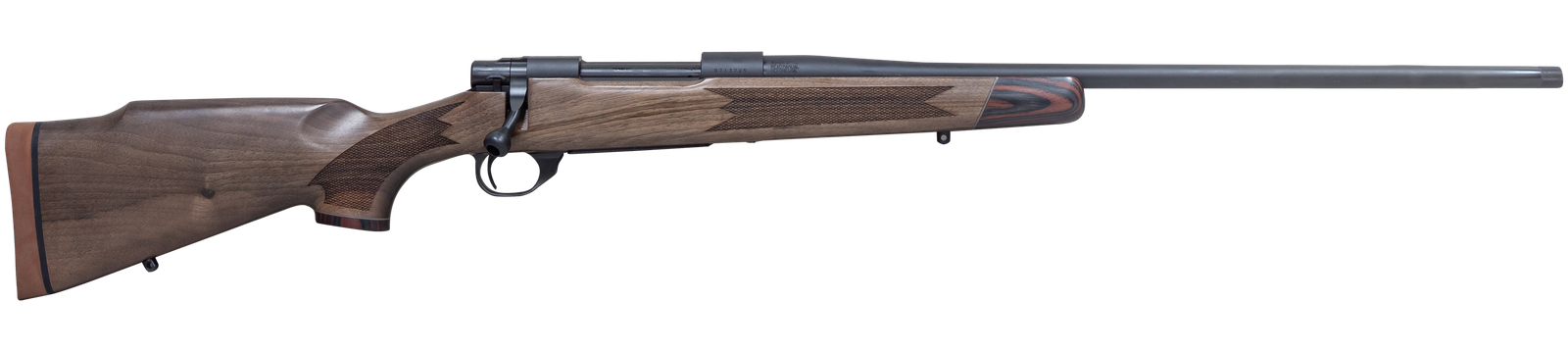
Every few years someone corners me at a gun show or across a dying campfire and asks the question they believe has a single answer: what's the best hunting rifle? They want a make, a model, and a calibre—something they can write on a slip of paper and hand across a gun-shop counter. I never give them one, and it isn't because I'm being coy. The ideal hunting rifle is less an object than an argument, and the terms of that argument are set by the country you hunt, the game you're after, and—more than most men will admit—by you.
That said, I won't hide behind it depends. There are principles. After enough seasons and enough rifles, some brilliant and some best forgotten, the qualities that matter start to sort themselves out from the ones that only sell magazines.
Purpose comes first
A rifle is a tool built to a purpose, and the moment you pretend one rifle serves every purpose equally you've started lying to yourself. The featherweight mountain gun that rides so sweetly up a Karoo koppie or a Rocky Mountain basin becomes a punishing brute off the bench and a poor choice for the man who shoots twice a year. The heavy-barrelled tack-driver that prints one ragged hole at the range will curse you by mid-morning on the third day of a walk-and-stalk. Honesty about how and where you actually hunt—not how you imagine you hunt—is the beginning of wisdom here.
So before we talk hardware, answer three questions plainly. What is the largest animal you'll realistically shoot? What is the farthest shot you'll ethically take? And how far must you carry the thing to get there? Everything downstream flows from those answers.
The cartridge question
Nowhere does more nonsense get spoken than about calibre. Hunters treat cartridge choice like a football allegiance, and the truth is duller and more forgiving: a great many cartridges will kill game cleanly, and the differences between the good ones matter far less than shot placement.
For the widest range of plains game and North American big game, the honest sweet spot has sat for a century in the mid-bores. The .30-06 Springfield, now well past its hundredth birthday, still does nearly everything a general hunter needs—from springbok to eland, from whitetail to elk—with factory ammunition available in any dorp or trading post on earth. The .270 Winchester, which Jack O'Connor spent a career championing in the pages of Outdoor Life, remains a flat-shooting, mild-mannered killer of open-country game. The .308 Winchester gives up little to the '06 in a shorter, handier action. And if I were starting a young hunter today with no ballistic baggage, I'd hand them a 6.5 Creedmoor without apology: efficient, accurate, light on the shoulder, and superbly matched to modern high-BC bullets. The old guard sneers at it. The old guard is wrong.
Go bigger only when the game demands it. For the largest bovines and bears, a .300 magnum earns its recoil. For genuine dangerous game, the .375 H&H remains the standard by which the rest are judged, and the legal minimum in much of Africa besides. But most hunters chronically over-gun themselves, buying magnum recoil they can't shoot well to solve a problem they don't have. A flinch kills more clean shots than any cartridge ever saved.
The rifle itself
For all but the specialist, the bolt action is still the right answer—simple, strong, accurate, and reliable in dust, mud, and cold. Whether you want controlled-round feed depends on your game. The Mauser-pattern action, with its long claw extractor that grips the case from the moment it leaves the magazine, feeds with a reassuring certainty that matters a great deal when a buffalo is closing and rather less when you're prone over a bipod at a distant kudu. For dangerous game I want that claw. For everything else, a good modern push-feed rifle is entirely sufficient, and often more accurate out of the box.
Weight is the quiet variable that decides whether you'll love or resent a rifle. Scoped and slung, a good general-purpose rifle lands somewhere around three and a half kilos—call it seven and a half to eight and a half pounds. Lighter than that and recoil starts to bite and the barrel grows hard to hold steady when your lungs are heaving. Heavier, and the mountain punishes you for every ounce. Balance matters as much as mass: a rifle that carries its weight between your hands points like an extension of your body.
Then there's the trigger, which more hunters should obsess over and fewer do. A clean break at roughly a kilo and a half—three to three and a half pounds—with no creep and no slop, will do more for your field accuracy than another two hundred rand's worth of optic. A gritty, heavy trigger drags the muzzle off target at the worst possible instant. If your rifle came with a poor one, have it tuned or replaced. It's the cheapest accuracy you'll ever buy.
Glass, and the honesty of range
Optics should match the shooting you actually do, not the shooting you fantasise about. The old 3–9×40 remains the most sensible general hunting scope ever built, and a 2.5–10× or 3–15× covers open country handsomely. Leave the 25-power target scopes to the target shooters. The overwhelming majority of game is taken inside three hundred metres, and inside that envelope a modest, bright, rugged scope with a simple reticle beats a fragile marvel of turrets and reticle clutter every time. Buy good glass, mount it properly, and don't let it write cheques your field marksmanship can't cash.
As for accuracy: a rifle that groups inside an inch and a half at a hundred metres will put every bullet where it belongs in a big-game animal's vitals out to any range you've any business shooting. Sub-minute groups are a pleasant thing to admire on paper. They are almost never the difference between a filled tag and an empty one.
The one you know cold
Here is the answer I finally give, if the campfire's still burning and the man is serious. The ideal hunting rifle is the one that has become invisible in your hands—the one you've carried until it feels weightless, fired until its cold-bore shot holds no mystery, and trusted until raising it is thought rather than action. That rifle may be a plain synthetic-stocked .308 or a battered .30-06 handed down with the stock worn pale where a grandfather's palm rode it. The make on the barrel matters far less than the miles between you and it.
Buy sensibly, shoot relentlessly, and stop chasing the perfect rifle. Go and become the perfect shot with the good one you already own.
Responses
Sign in to respond.
Loading responses…